








Ready-to-use Excel files for 10 structural repair items for reinforced concrete slabs and beams. For each item, they bring together everything a technical office and the supervision team need: quantity take-off by dimensions, the technical item description, material specifications per the code, staged inspection, the method of measurement, and payment and interim certificates.
Why these files matter
1. The right item for every damage case
Repair work can’t be priced at a single rate. The files distinguish between levels of damage:
- Case A: surface repair.
- Case B: repair with added reinforcement.
- Case C: severe damage, needing shoring, propping and bar anchoring where more than 25% of the bar section is lost.
That way, a simple repair is never priced as strengthening, and strengthening is never carried out at a repair rate.
2. Ready-made technical wording that saves the technical office time
Each item’s description and execution steps are professionally written and can go straight into the BOQ or the tender specifications, with no rewriting or research.
3. Specifications in numbers, not generic statements
Every material has defined requirements per the code: mortar strength, rebar cleaning grade, strengthening bar grade and lap lengths. This gives the supervision team, the contractor and the supplier one reference for approval and acceptance.
4. Quality is inspected before it is covered up
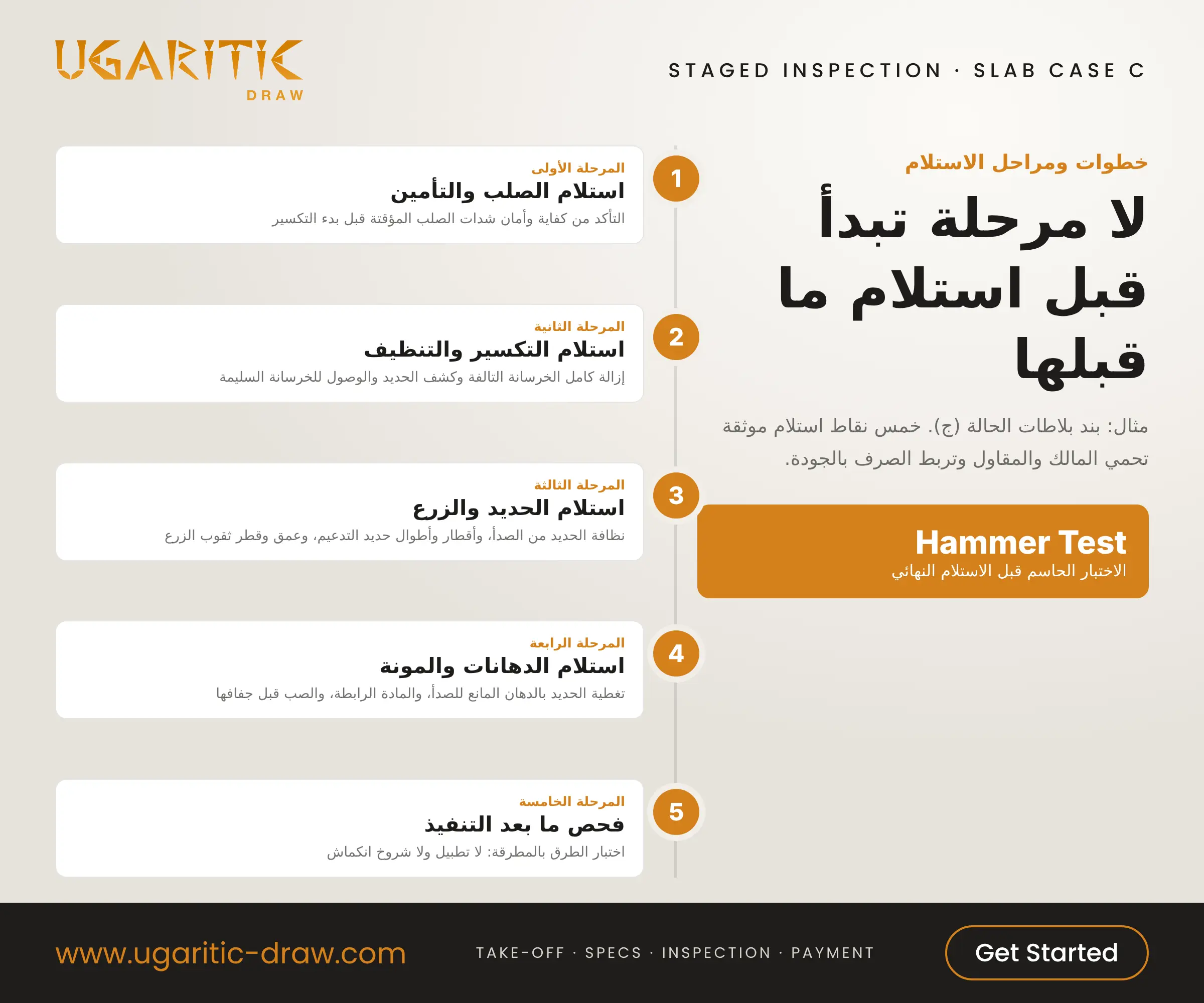
Staged inspection checks each step before the next one covers it: shoring, then breaking out, then rebar and anchoring, then coatings and mortar, and finally the hammer test. Defects in hidden repair work are found before it’s too late.
5. Payment tied to actual progress
Interim payments are tied to the inspection stages (25%, 25%, 30% and 20%). The contractor is paid as the work progresses, and the owner only pays for stages that have been inspected and approved.
6. No disputes over payment
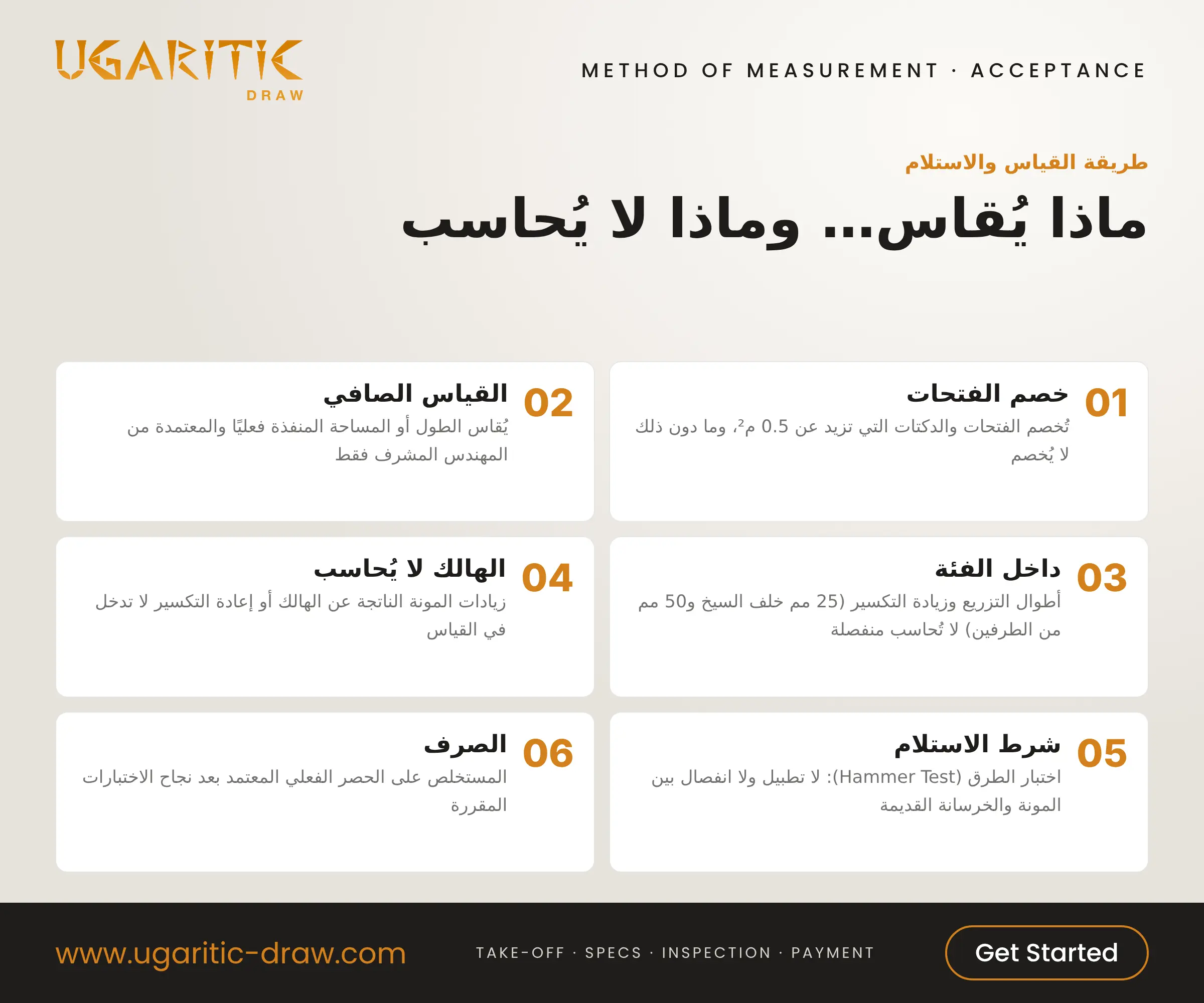
The measurement rules are clear from the start:
- what is measured, and what is deducted;
- what is included in the rate and not paid separately;
- what is not paid at all, such as wastage and re-breaking.
This settles the most common points of dispute between the contractor and the supervision team.
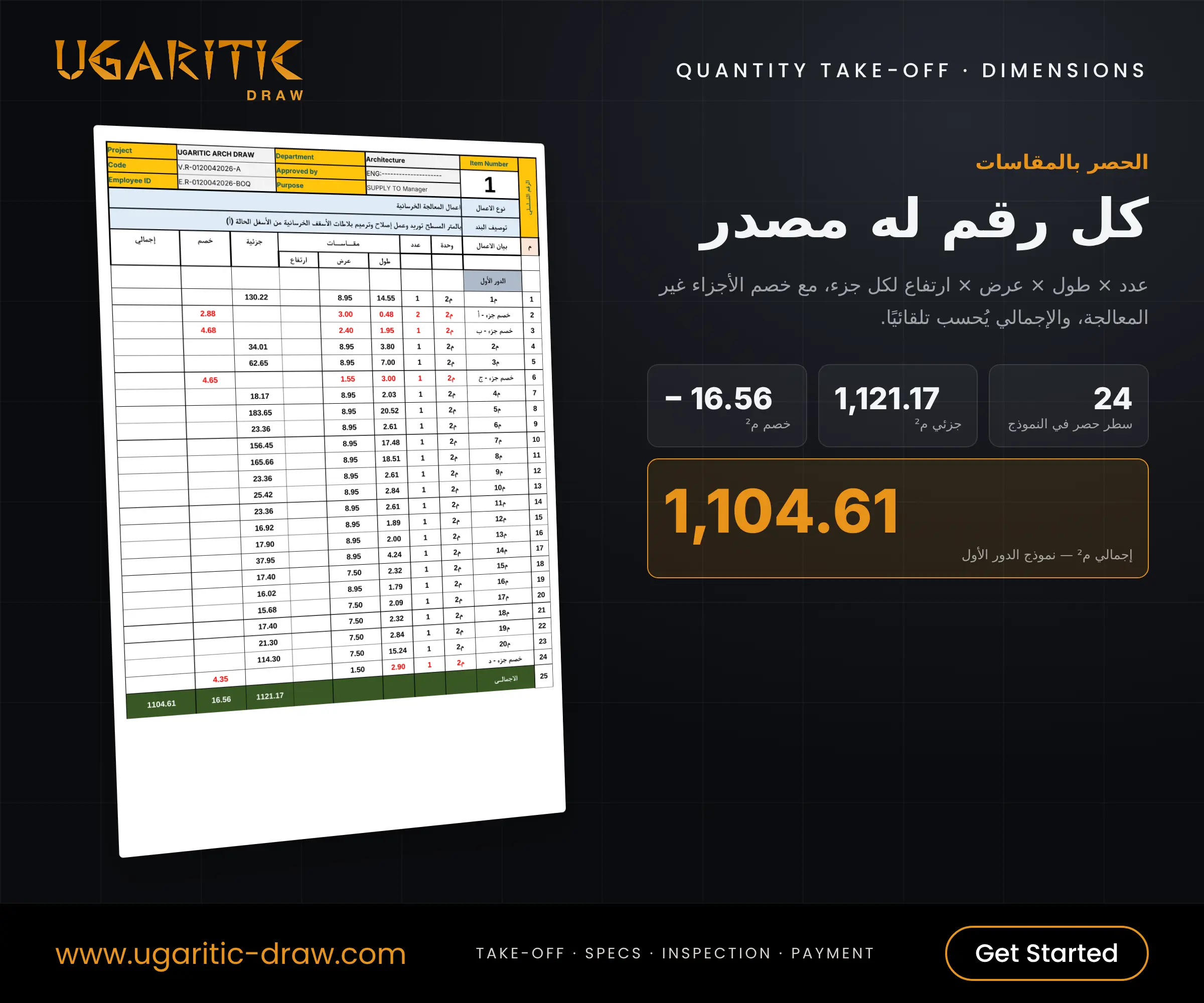
7. Take-off that can be checked
Every quantity is built from clear dimensions, with visible deductions and an automatically calculated total. This makes it easy to review and approve, and protects the interim certificate from objections.
8. A reusable template
The same structure works for any repair project: change the dimensions and rates, and the wording, specifications, inspection and measurement rules are all still ready to use.
Who these files are for
- Contractors’ technical offices: pricing, quantity take-off and preparing interim certificates.
- Supervision engineers and consultants: staged inspection and approving quantities.
- Repair and strengthening engineers: a reference for execution steps and materials.
- Cost engineers: understanding what the rate covers and how payment is split.
- Engineers and students: a complete worked example of repair items.