

General introduction
A drawing shows an element’s shape and location, but it does not answer the questions that come after installation: What brand is it? Where is it from? What is its actual efficiency? When does its warranty end? How often is it serviced? These answers are the Level of Information (LOI).
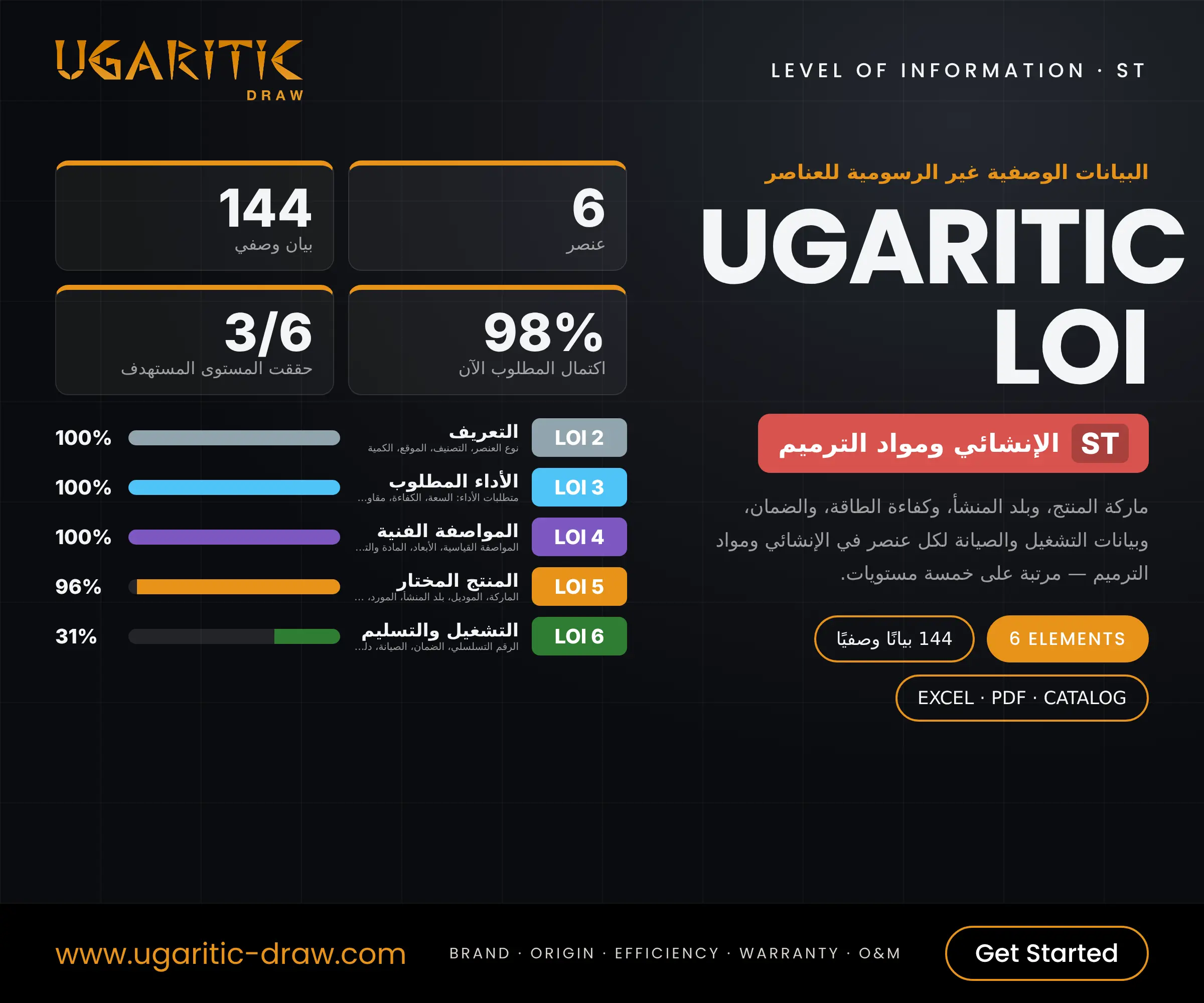
Organizing the data into five levels defines what is required at each stage, who is responsible for it, and where the gap is now. Design provides identity, performance and specification; the contractor and supplier provide the actual product; and handover provides the operation and maintenance data for facility management.
ST: Structure & Repair Materials
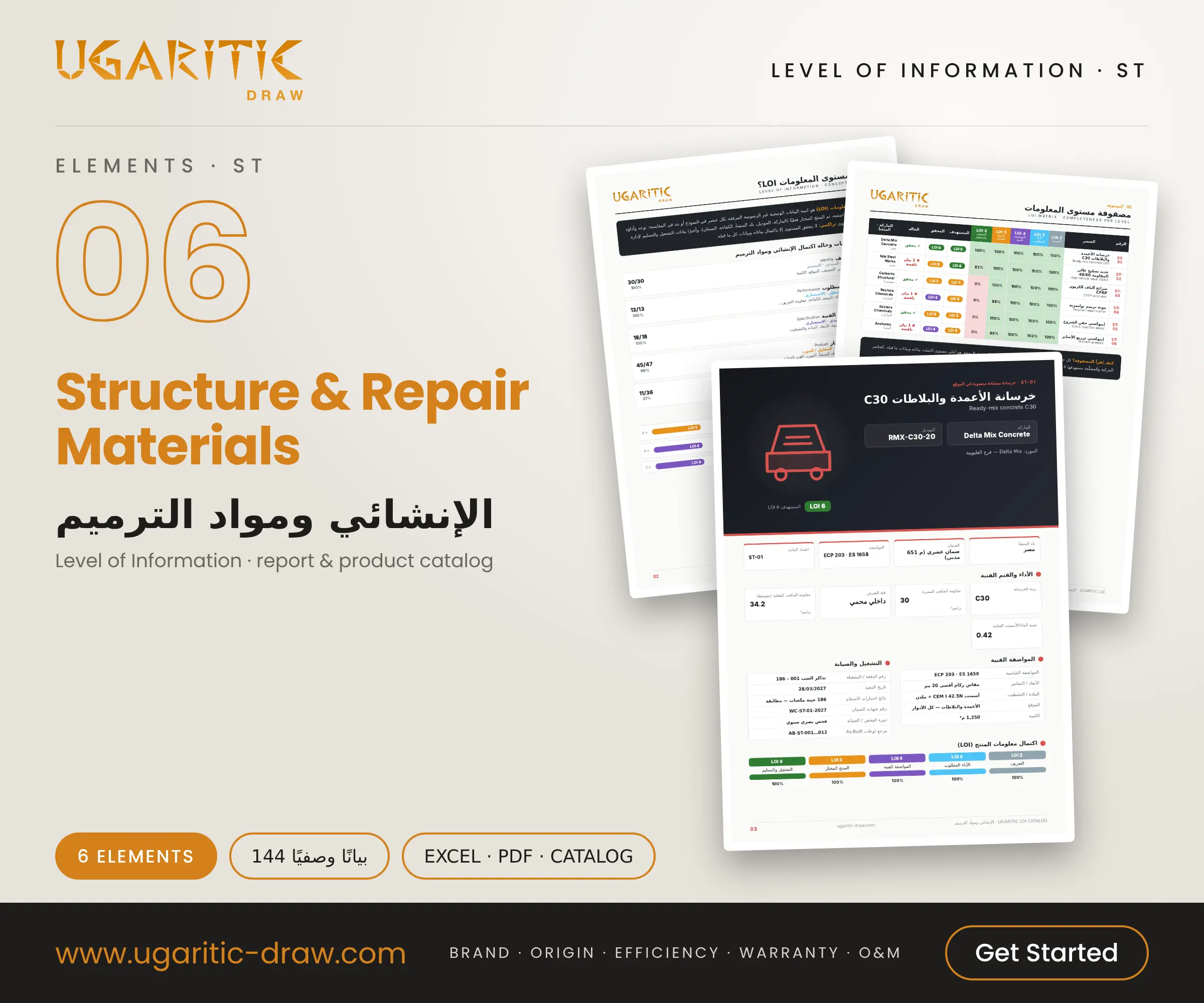
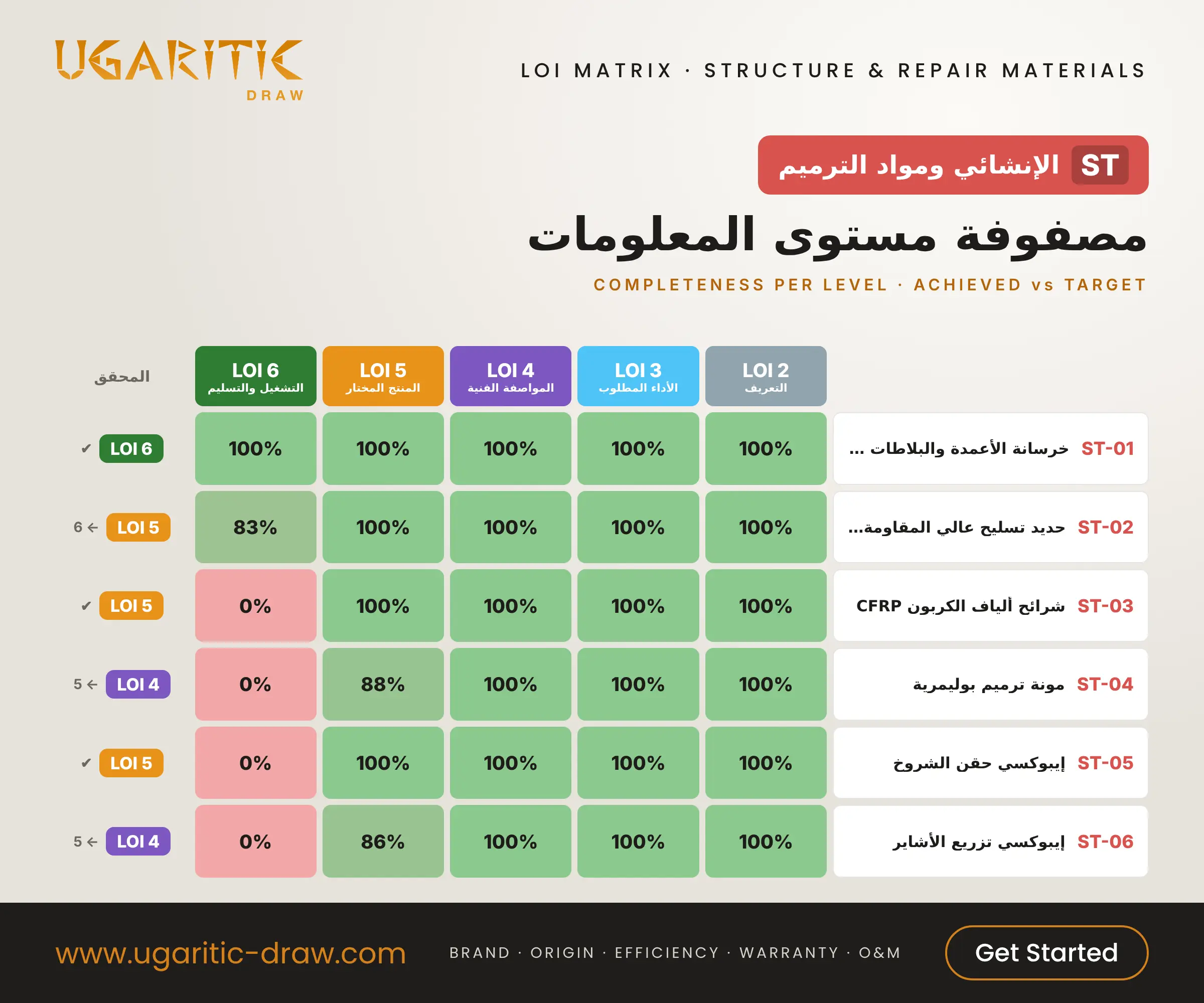
6 elements · 144 attributes · 98% of currently required data complete
Structural elements cannot be easily replaced or inspected after casting and strengthening. Their non-graphical data is therefore the memory of the structure for the life of the building.
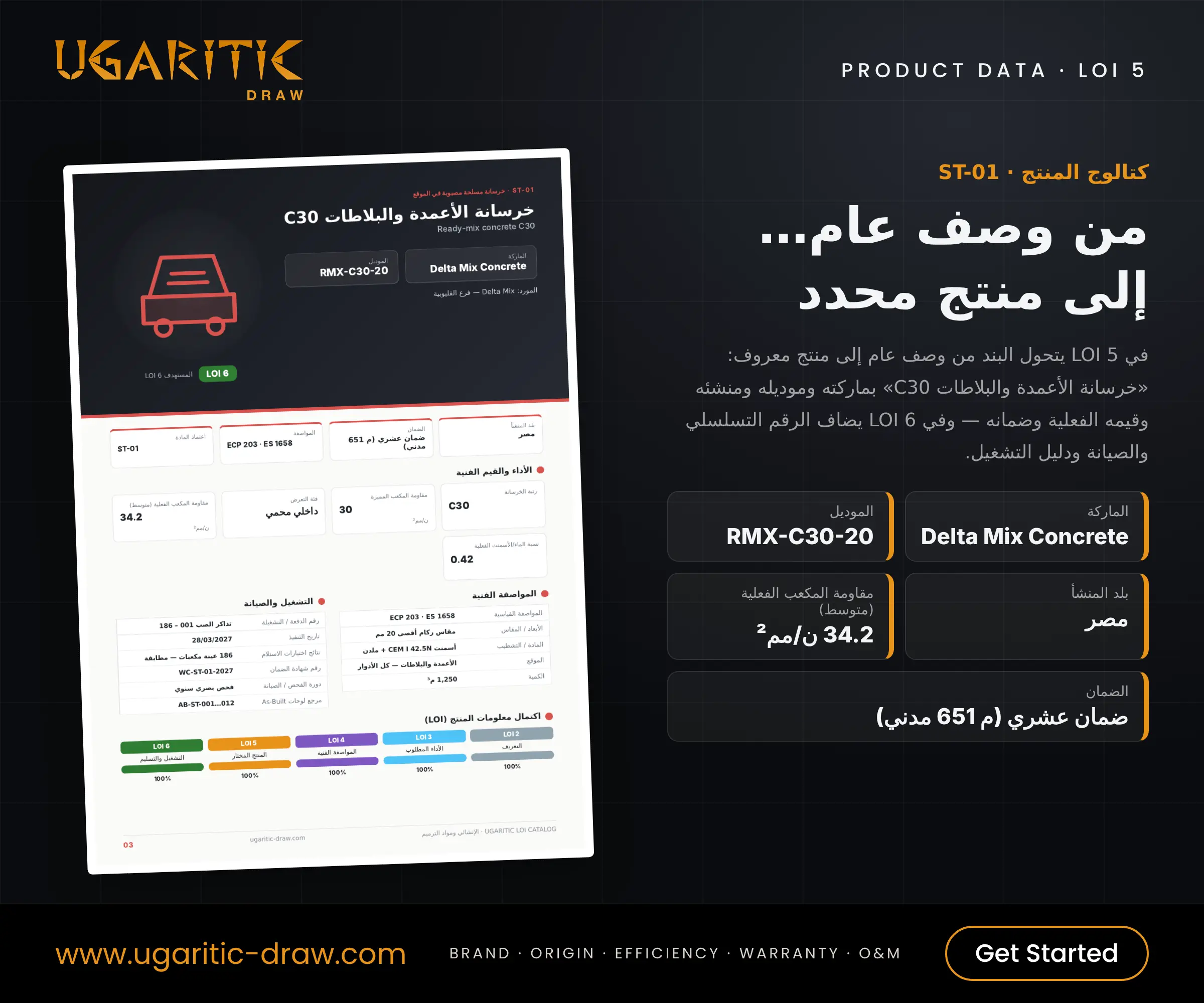
- LOI 5 identifies the source of every material: the concrete supplier, the steel mill, the brand of the CFRP laminates and epoxies, their origin, and their actual values such as average cube strength and actual yield stress.
- LOI 6 keeps what cannot be recovered later:
- Pour ticket numbers and mill certificates.
- Acceptance test results.
- As-built drawing references.
- The ten-year decennial liability.
- Any future repair, extension or structural assessment starts from this data; without it, testing must be repeated destructively.
- Current gaps:
- As-built drawing reference for the rebar.
- Actual working time of the repair mortar.
- Model of the anchoring epoxy.