
General introduction
A drawing shows an element’s shape and location, but it does not answer the questions that come after installation: What brand is it? Where is it from? What is its actual efficiency? When does its warranty end? How often is it serviced? These answers are the Level of Information (LOI).
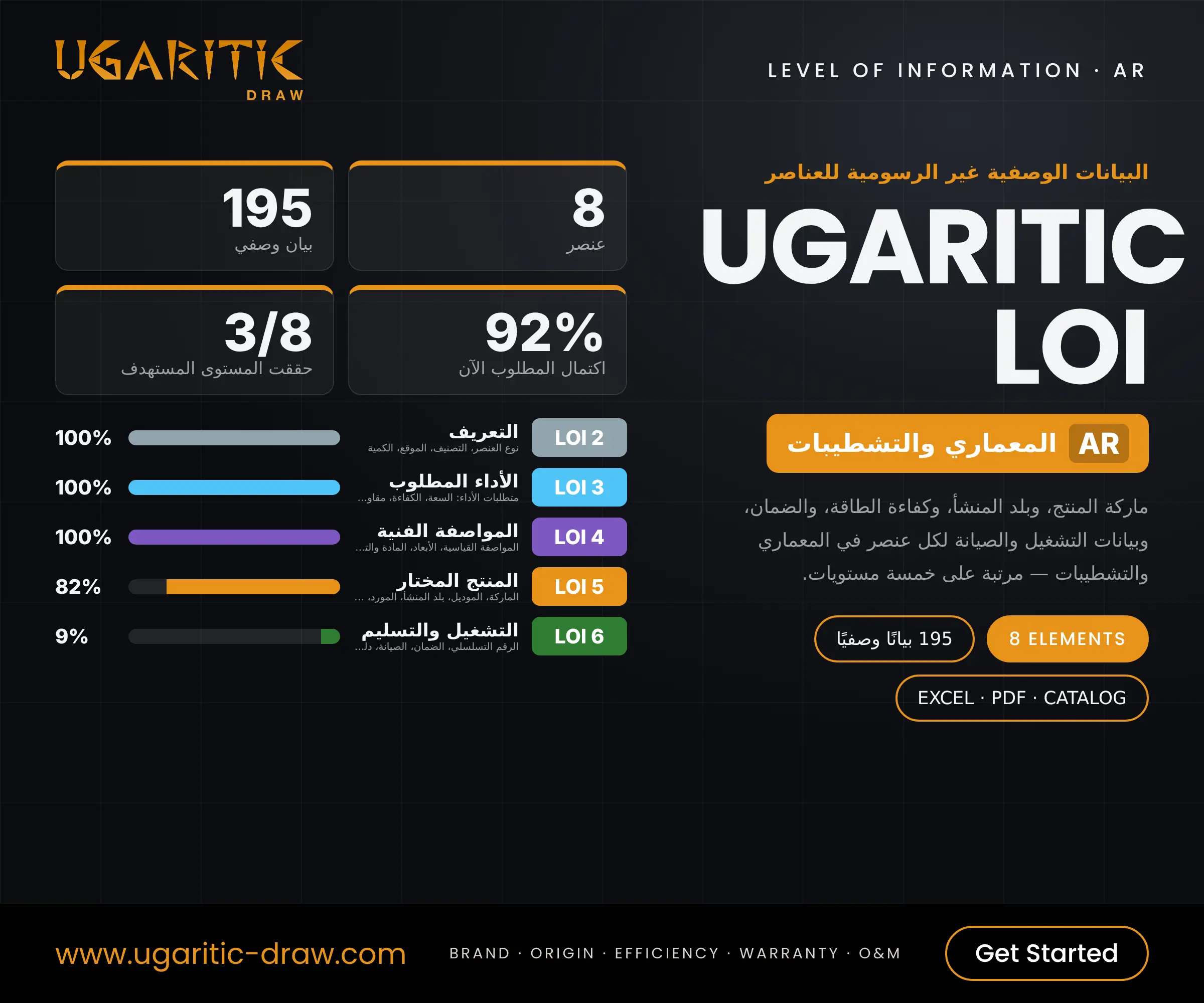
Organizing the data into five levels defines what is required at each stage, who is responsible for it, and where the gap is now. Design provides identity, performance and specification; the contractor and supplier provide the actual product; and handover provides the operation and maintenance data for facility management.
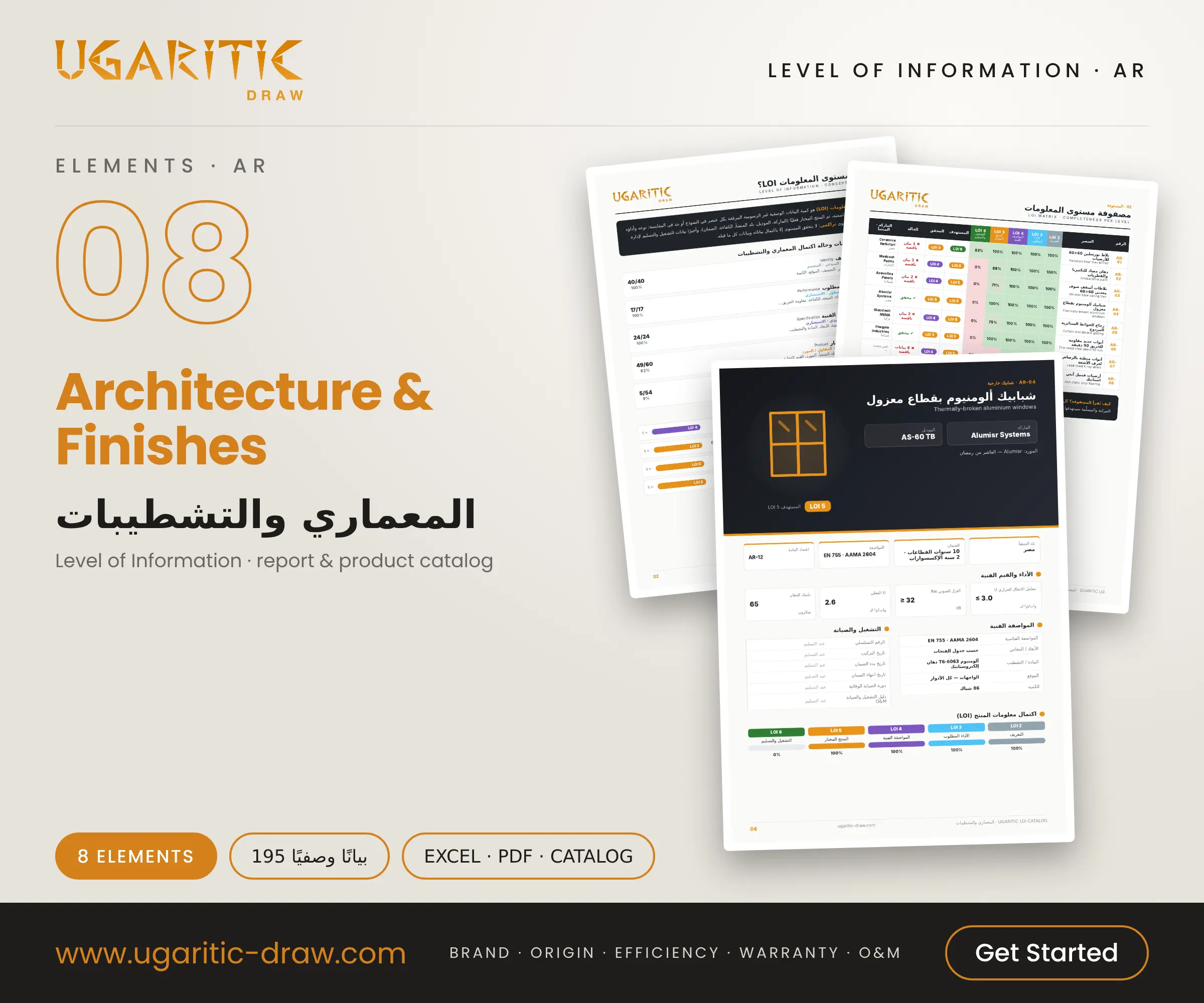
AR: Architecture & Finishes
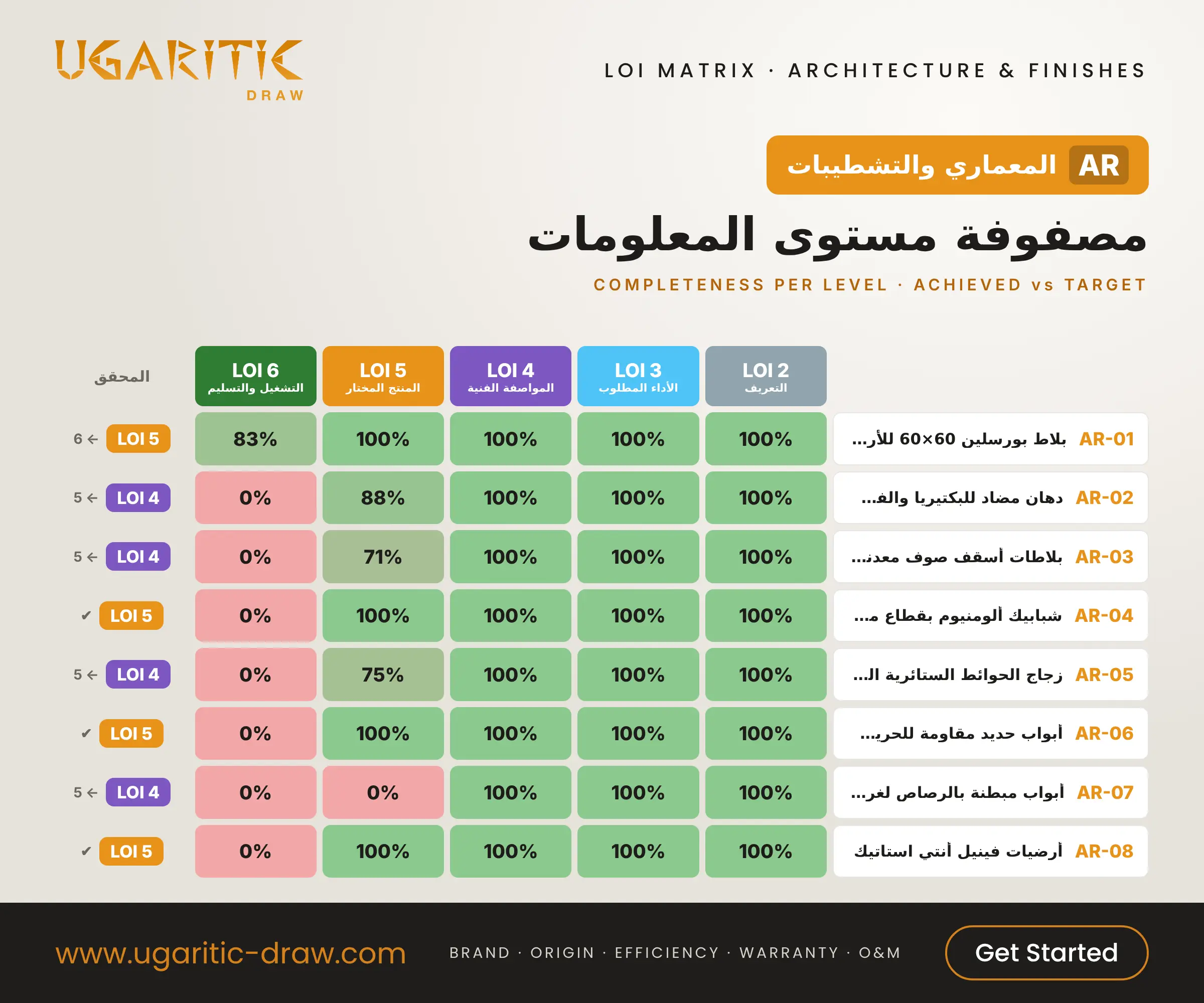
8 elements · 195 attributes · 92% of currently required data complete
Finishes are what gets replaced and maintained most in a building, and they have the widest variety of suppliers and origins. Without LOI, replacing a tile, a ceiling panel or a door turns into a search for an unknown product.
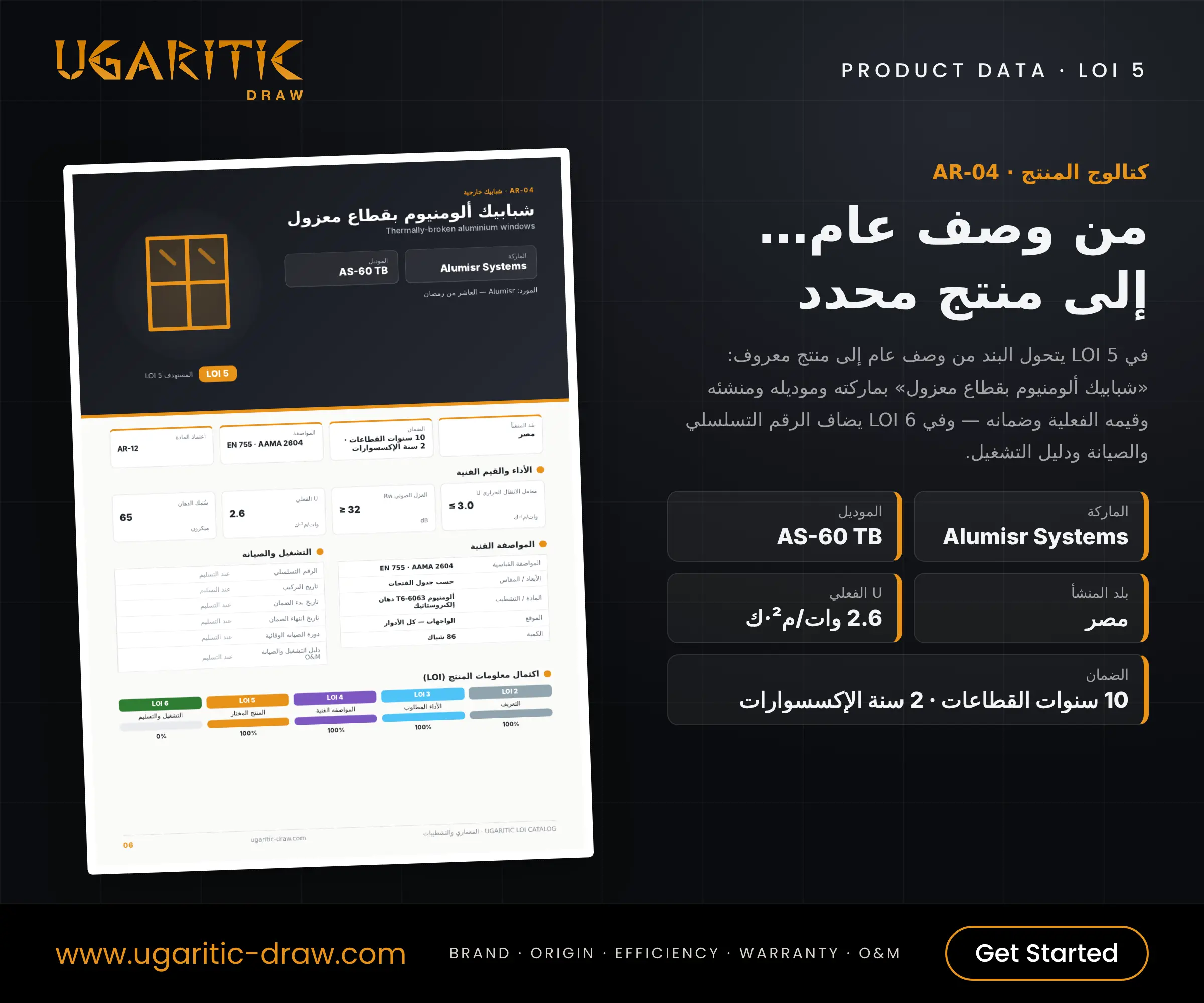
- LOI 5 defines:
- The tile brand, model, shade and lot number, so any later replacement matches.
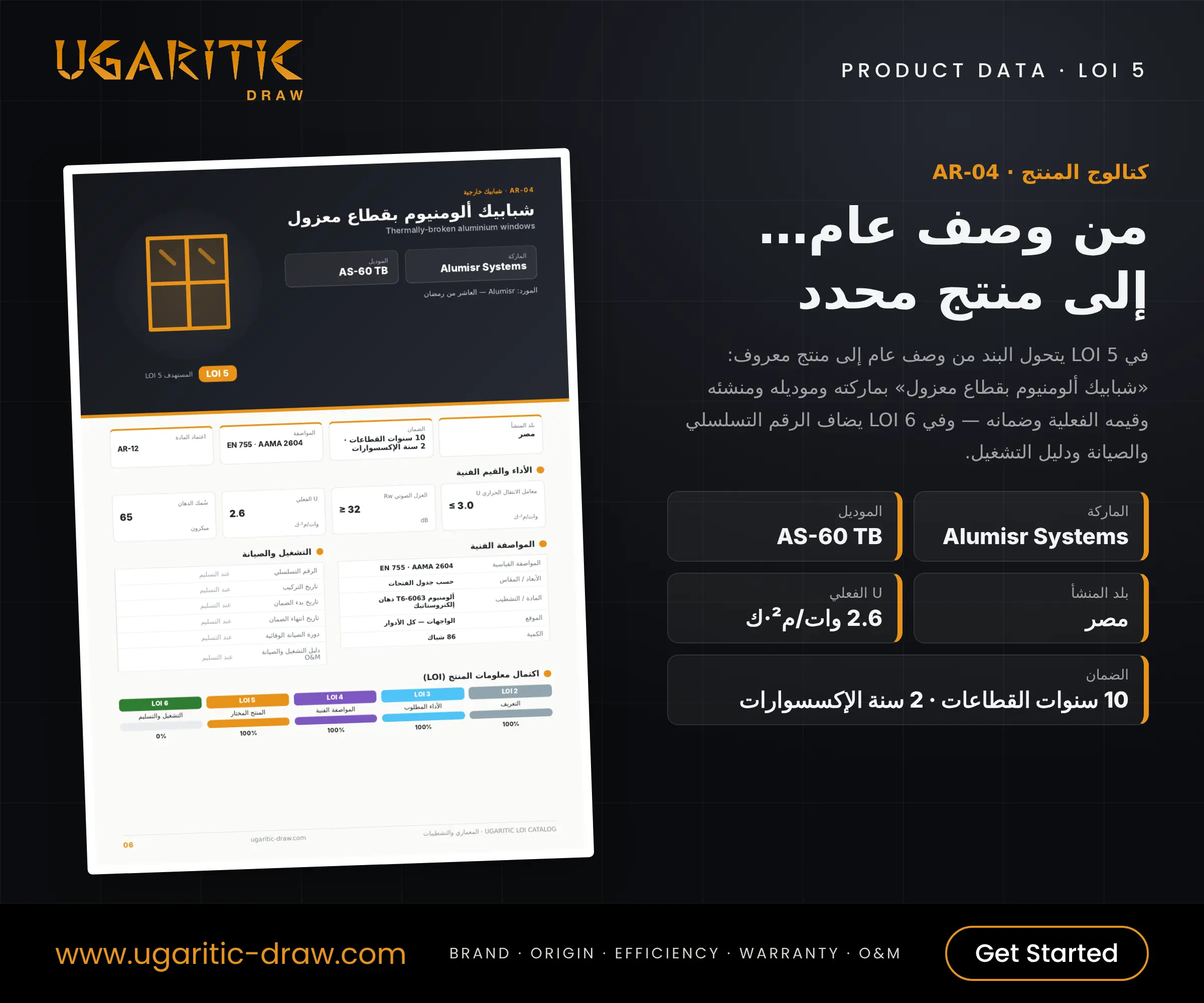
- The glass origin and its actual U-value and SHGC.
- The warranty period for profiles and accessories.
- Healthcare-specific requirements must be documented by the product, not by description: lead equivalence for X-ray doors, electrical resistance for anti-static floors, and the ISO 22196 report for antibacterial paint.
- Current gaps:
- X-ray room doors with no product selected yet (5 missing attributes).
- Ceiling tiles with no model and no approval.
- Actual values for the double glazing.