

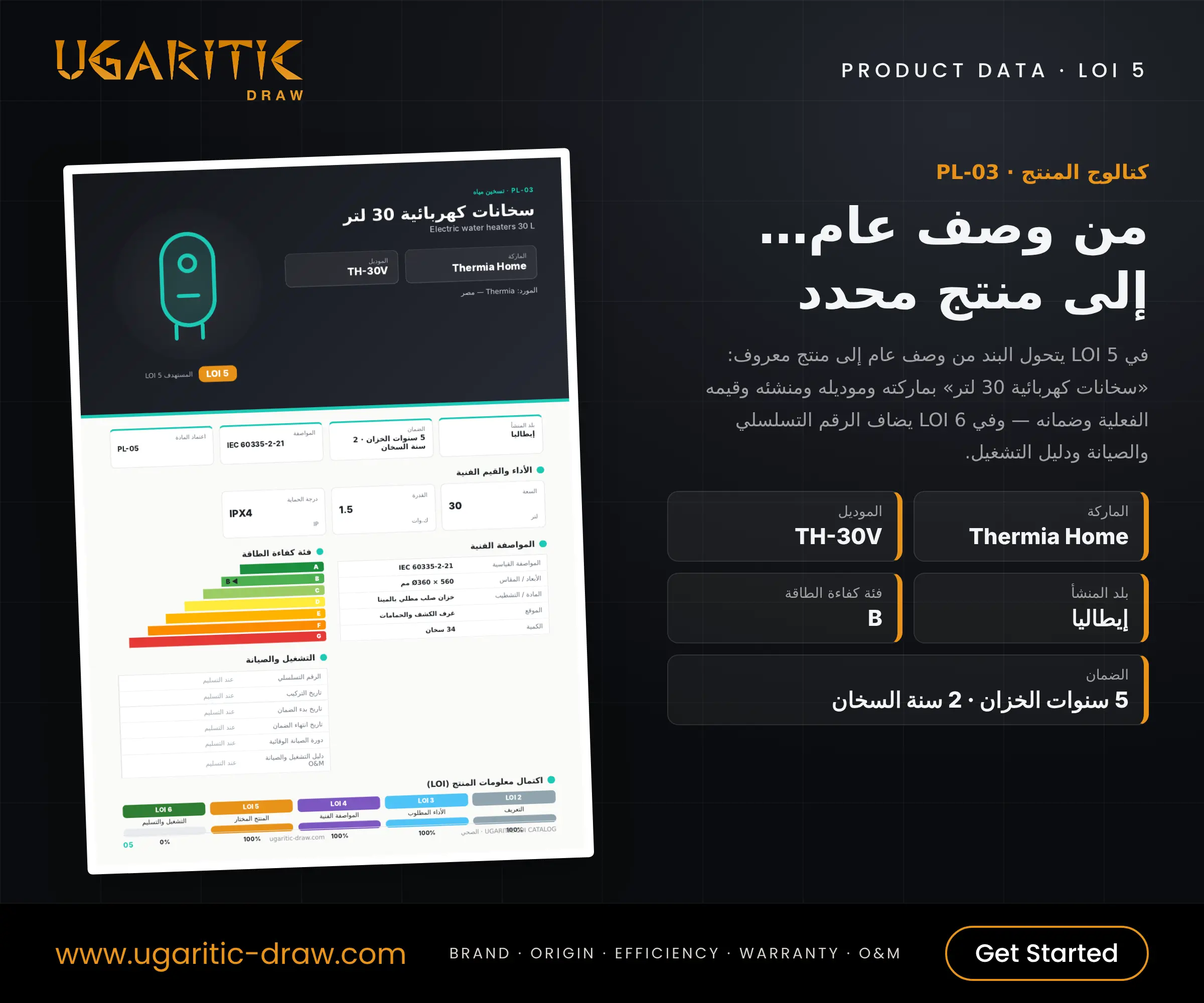
General introduction
A drawing shows an element’s shape and location, but it does not answer the questions that come after installation: What brand is it? Where is it from? What is its actual efficiency? When does its warranty end? How often is it serviced? These answers are the Level of Information (LOI).
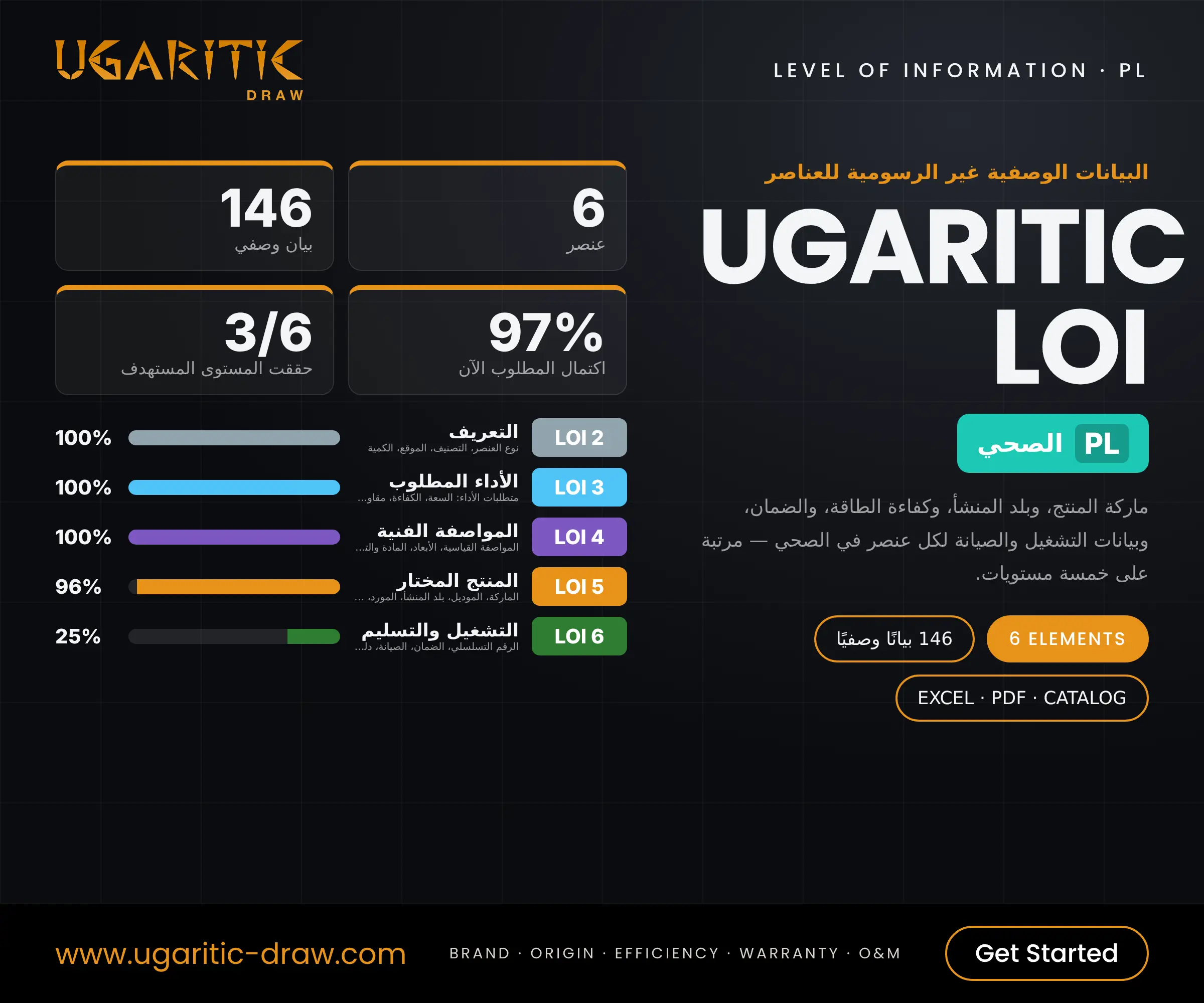
Organizing the data into five levels defines what is required at each stage, who is responsible for it, and where the gap is now. Design provides identity, performance and specification; the contractor and supplier provide the actual product; and handover provides the operation and maintenance data for facility management.
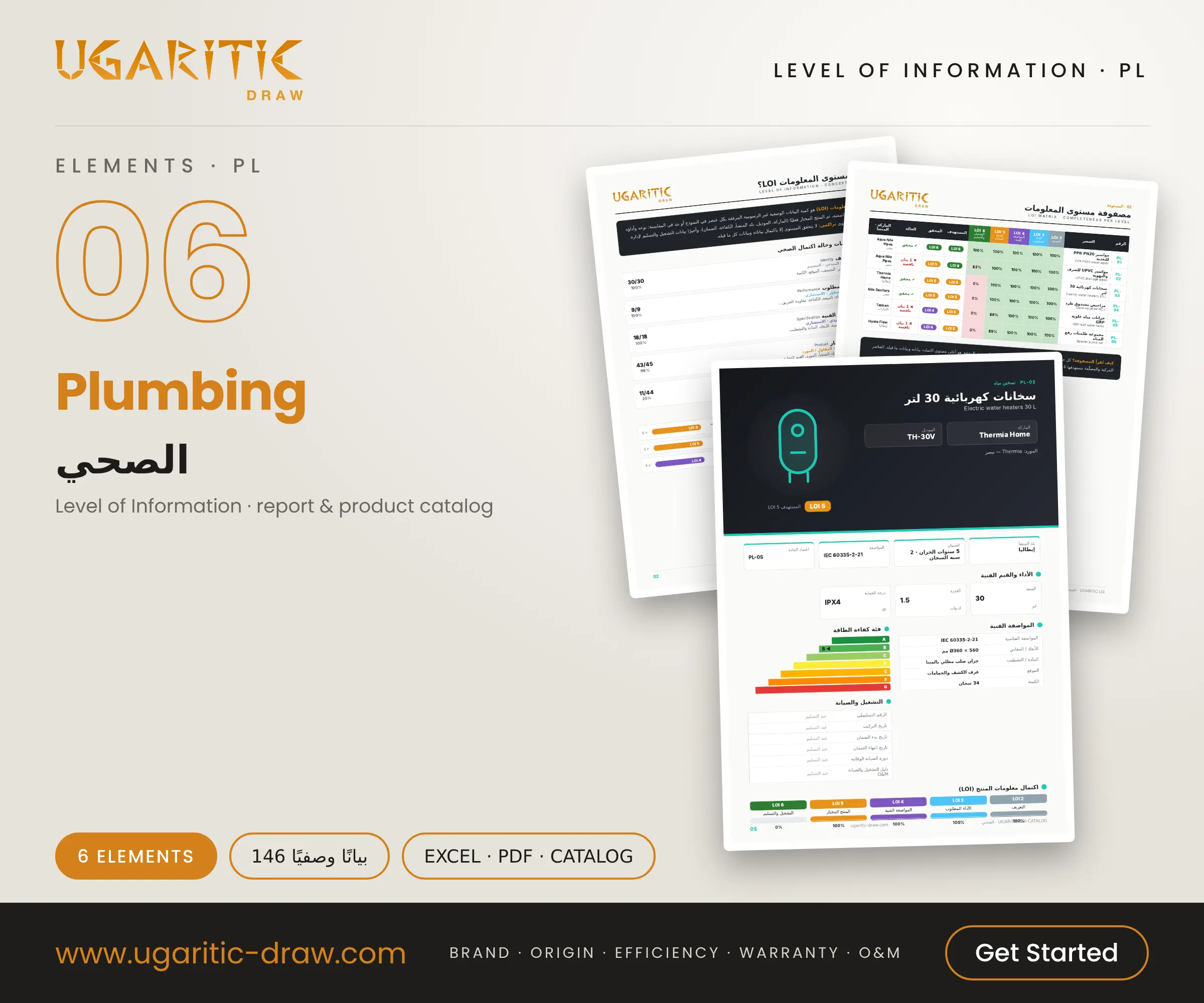
PL: Plumbing
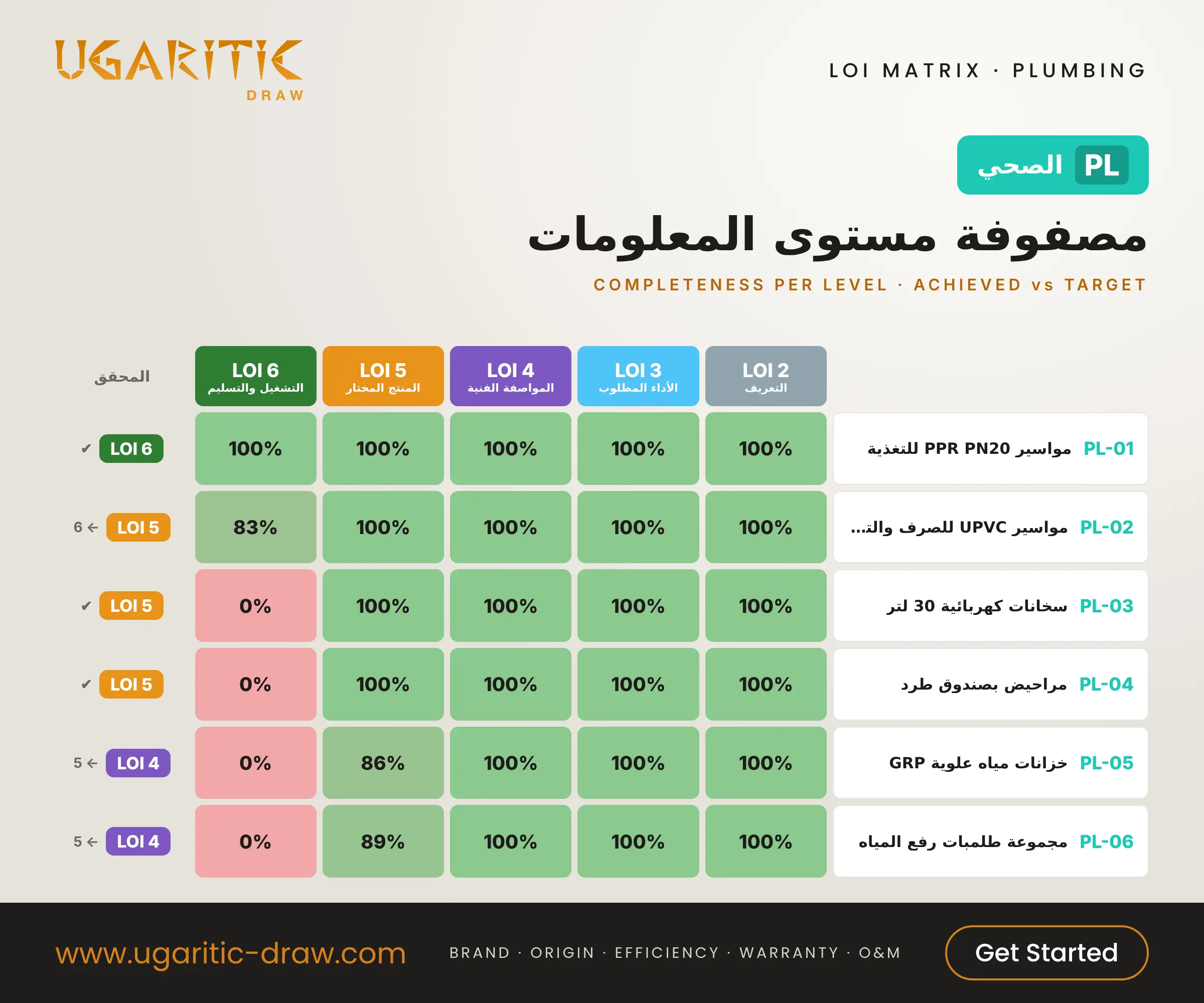
6 elements · 146 attributes · 97% of currently required data complete
Most plumbing work is buried inside walls and floors. When a leak happens years later, the first question is: what type and class of pipe is it, and who supplied it?
- LOI 4 and LOI 5 define the PN20 pressure class, SDR, operating temperature and manufacturer, so the right replacement is bought the first time.
LOI 6 keeps:
- The results of the 24-hour pressure test.
- The batch number.
- The warranty period of up to 10 years.
This data is the basis for any warranty claim.
- For pumps, heaters and tanks: the performance curve, IE3 motor efficiency and energy class determine the monthly running cost.
- Current gaps:
- Performance curve of the booster pumps.
- Supplier of the roof tanks.
- As-built reference for the drainage pipes.