

1. Brief Description of the Report
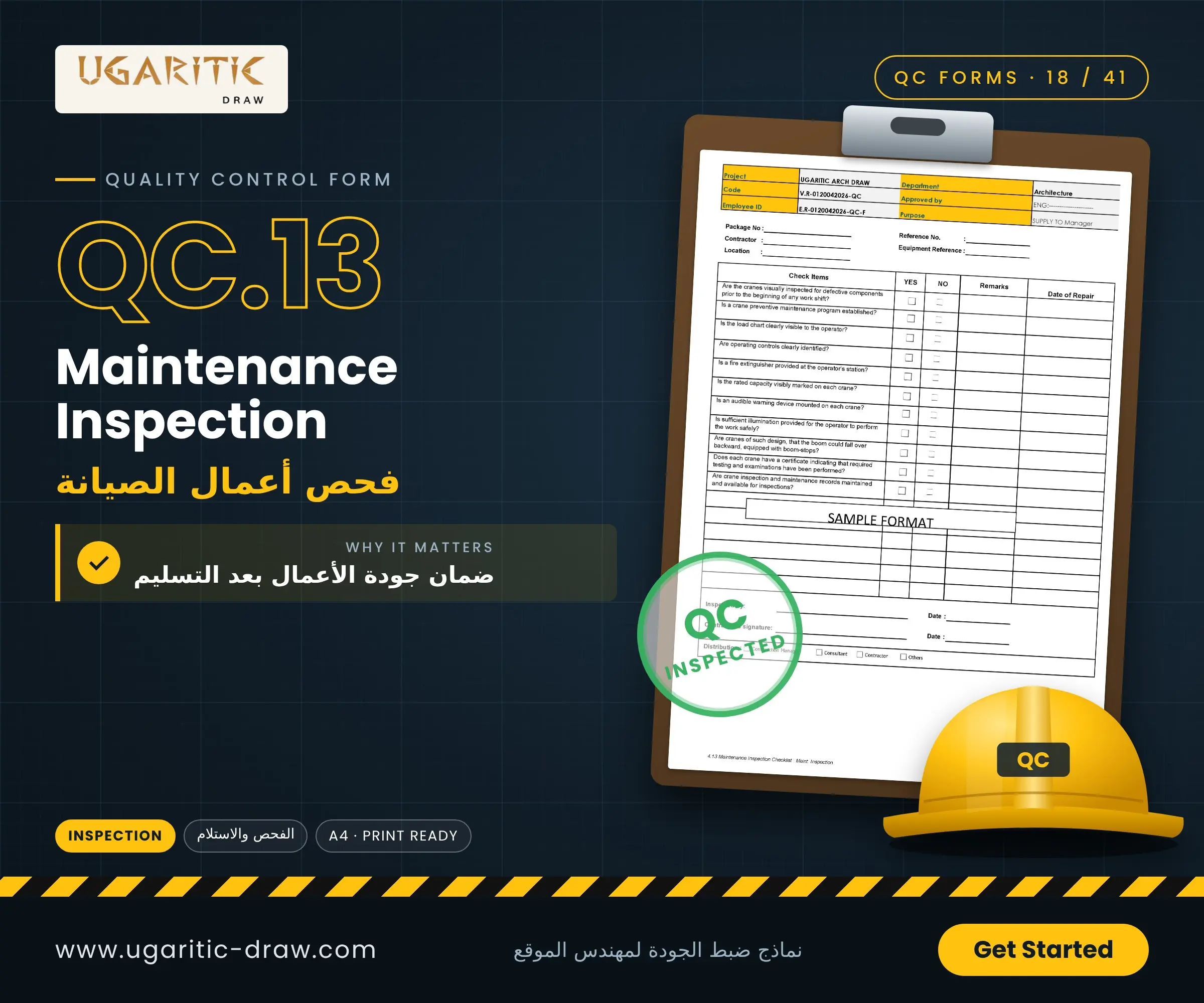
The document is a standardized, actionable auditing checklist designed to evaluate the mechanical safety and technical compliance of cranes operating on-site. It consists of the following sections:
- Equipment & Location Identity: Fields to document the contractor's name, precise site location, package number, and specific equipment/reference numbers.
- Audit Check Items: A tabular list of 11 critical safety questions regarding crane operations, including:
- Conducting visual inspections for defective components before work shifts begin.
- Confirming the implementation of a preventative maintenance program and ensuring the load chart is clearly visible to the operator.
- Verifying the presence of critical safety features, such as functional fire extinguishers at the operator's cabin, audible warning devices, and clearly marked rated capacity indicators.
- Confirming that valid testing certificates and examination records are actively maintained and available on-site.
- Evaluation Matrix (YES / NO / Remarks / Date of Repair): Checkboxes to rate compliance for each item, an area to write down specific technical flaws, and a field to track the exact date an issue was fixed.
- Sign-off Block: Formal validation fields requiring signatures and dates from the inspector (Inspected by) and the contractor's authorized representative.
2. Purpose of the Report
The primary purpose of this checklist is to enforce rigorous preventative safety measures, ensuring all on-site cranes are fully operational and hazard-free to prevent catastrophic field failures. Its core objectives include:
- Upholding Site Safety Standards (HSE): Eliminating mechanical risks by confirming that heavy lifting equipment meets mandatory site safety controls before starting daily work shifts.
- Facilitating Proactive Maintenance: Creating an immediate mechanism to flag broken components early, forcing the contractor to schedule repairs and document them under the "Date of Repair" column.
- Regulatory & Legal Compliance: Making sure that heavy plant machinery holds certified validation paperwork, protecting the project from legal liabilities or compliance breaches during external safety audits.
- Operational Visibility (Distribution): Circulating the equipment status log to the Construction Manager, Consultant, and Contractor to maintain full transparency regarding the safety ratings of active site equipment.