

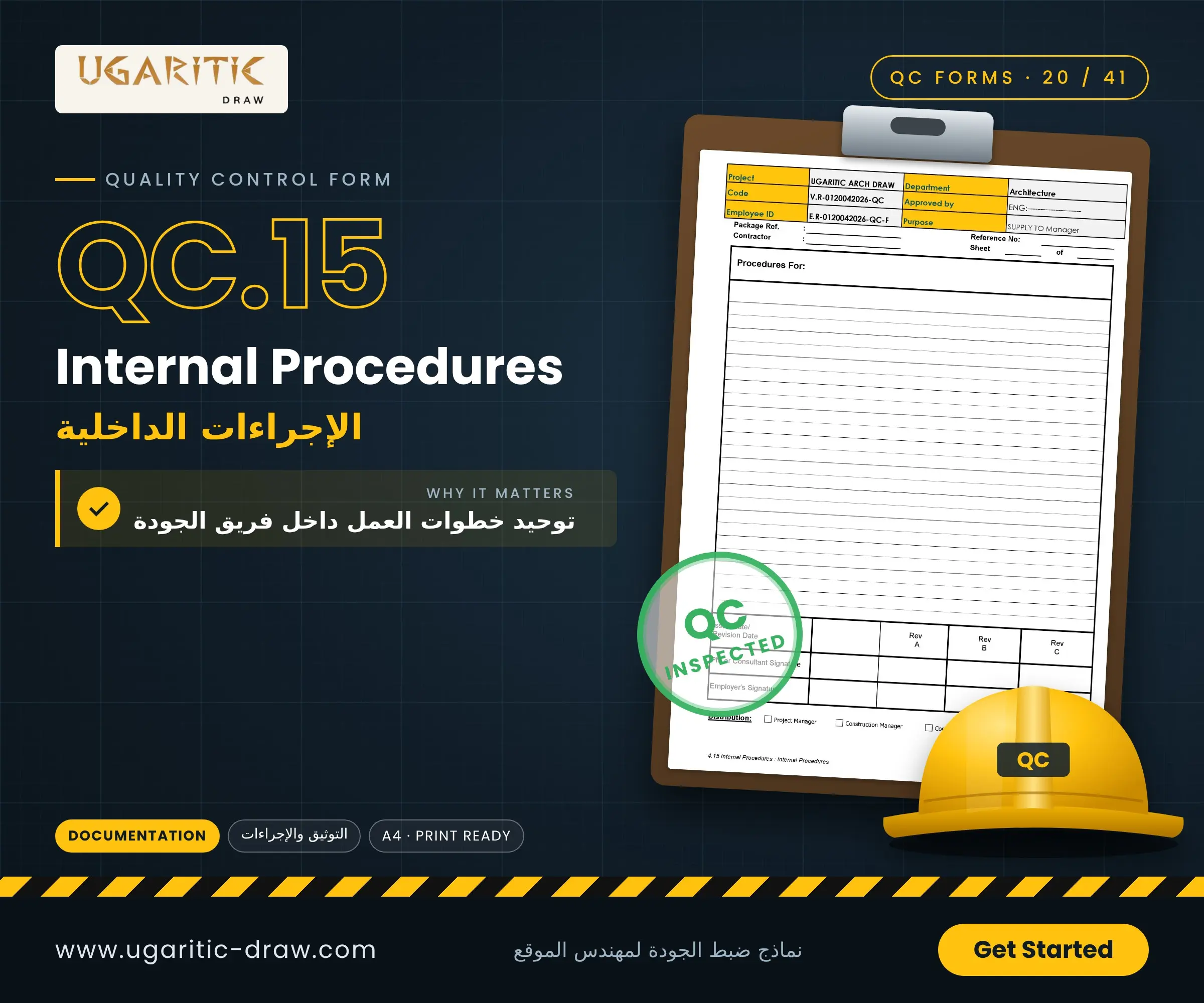
1. Brief Description of the Report
The document is a flexible, open template designed for drafting systematic workflows, and it consists of the following sections:
- Identification & Contractual Alignment: Fields to establish the Reference Number, Package Reference, Contractor's name, and page numbering (Sheet __ of __).
- Subject of Procedure (Procedures For): A main heading that explicitly defines the specific technical activity or operational process being documented (e.g., procedures for concrete pouring, roof waterproofing, or drawing submittals).
- Step-by-Step Workspace: Blank lines dedicated to listing a detailed, chronological sequence of steps to be followed when executing the named activity.
- Revision Tracking & Authorization Matrix: A critical table at the bottom to control updates and quality versions, containing:
- Issue Date / Revision Date: To track when modifications were made.
- Revision Columns (Rev A, Rev B, Rev C): To capture successive iterations of the document.
- PM or Consultant Signature: Official approval line for the Project Manager or Consultant.
- Employer's Signature: Final sign-off block for the client/owner.
2. Purpose of the Report
The primary purpose of an Internal Procedures document is to establish a unified, written operational reference that ensures repetitive tasks are executed with consistent efficiency and quality, eliminating guesswork. Its core objectives include:
- Standardization of Workflows: Providing field teams and contractors with a clear blueprint that limits personal interpretation, thereby reducing the rate of site errors or non-conformances.
- Change Management & Tracking: Utilizing the revision control log (Rev A, B, C) to continuously update site procedures based on changing field conditions, while ensuring the management and client legally endorse the binding latest version.
- Knowledge Transfer & Orientation: Facilitating the seamless integration and training of new engineers or staff joining the project by supplying official documentation that outlines specific project task behaviors.
- Cross-Party Coordination (Distribution): Ensuring authorized procedures are formally distributed among all primary stakeholders (Project Manager, Construction Manager, Consultant, and Contractor) so every team adheres to the exact same agreed-upon method.