

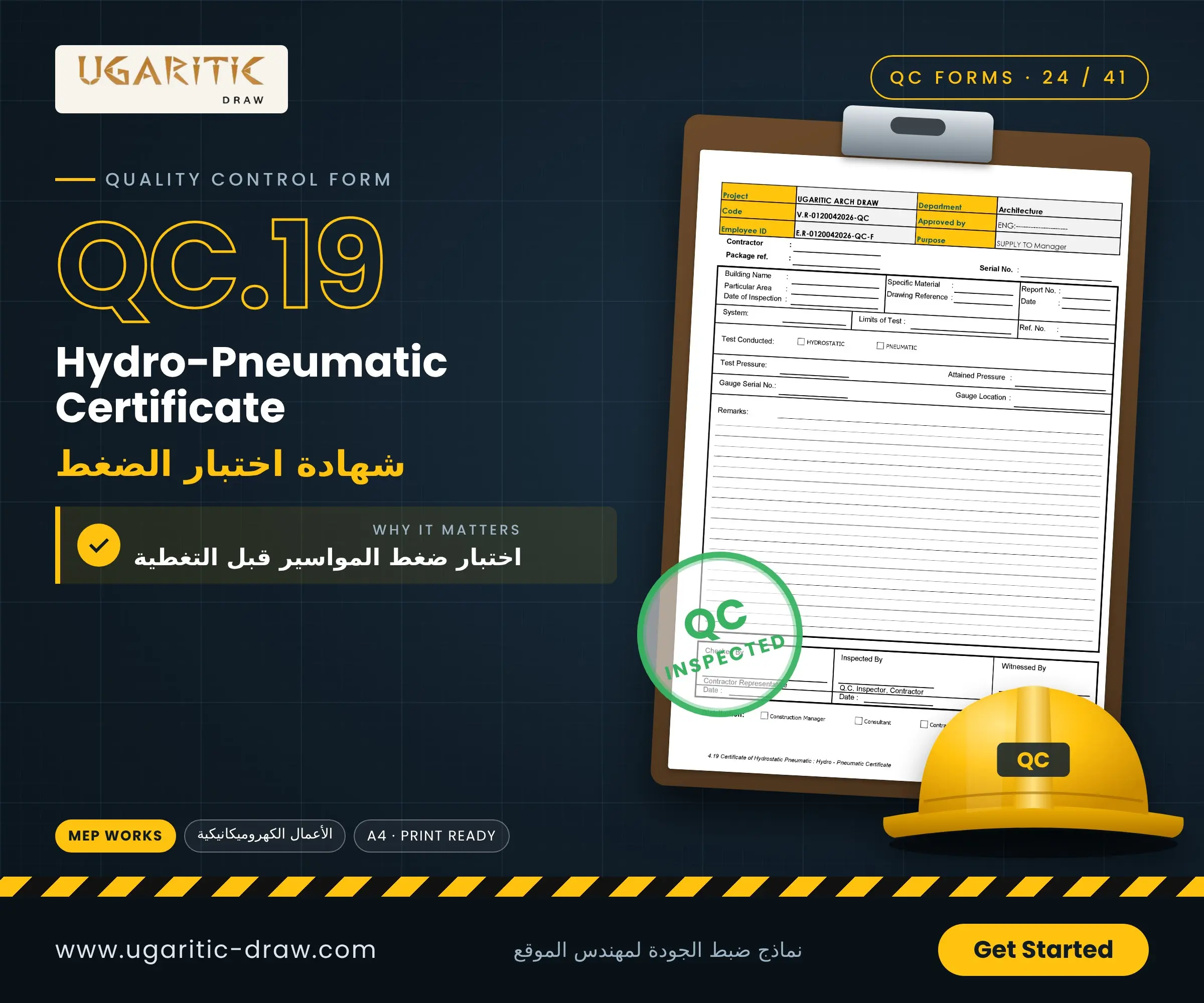
1. Brief Description of the Report
The document is a standardized technical certification form designed to record the baseline parameters and pressure values during pipeline testing. It consists of the following key sections:
- Site Reference & Tracking Data: Fields to record the Building Name, Particular Area under evaluation, Inspection Date, Drawing Reference, and the official Report No.
- Test Scope Boundaries: Specific entry fields to define the System being tested (e.g., domestic water, firefighting, or chilled water lines), the physical boundaries of the evaluation (Limits of Test), and the Ref. No.
- Methodology & Pressure Parameters: Interactive checkboxes to specify the test medium used: either water-based (HYDROSTATIC) or air-based (PNEUMATIC). This is followed by fields to input the engineered Test Pressure, the actual Attained Pressure held by the system, and the Gauge Serial No. and Gauge Location to ensure equipment calibration tracking.
- Remarks & Phased Validation: A comprehensive space for adding detailed technical observations (Remarks), followed by a mandatory multi-party validation block requiring signatures from the Contractor Representative, Q.C. Inspector, and the Consultant as an official witness (Witnessed By).
2. Purpose of the Report
The primary purpose of this certificate is to scientifically and field-verify that the installed piping networks are completely sealed, securely jointed, and capable of holding high pressure without any leakage. Its core objectives include:
- Verifying Joint & Material Integrity: Confirming that all pipe welds, threads, and mechanical joints can withstand future operational pressures without failing or weeping.
- Mitigating Hidden Risk Before Enclosure: Serving as a mandatory quality gate before the contractor is permitted to close service shafts, backfill trenches, or install false ceilings over the pipes, protecting the project from catastrophic hidden water damage.
- Ensuring Auditable Measurement Control: Documenting the specific pressure gauge serial number ensures that the test was conducted using calibrated, verified instrumentation that yields legally binding engineering data.
- Quality Records & Handover Archival (Distribution): Filing an official safety and quality certificate that is permanently routed to the Construction Manager, Consultant, and Contractor for inclusion in the final project handover files (As-Built Logs).