

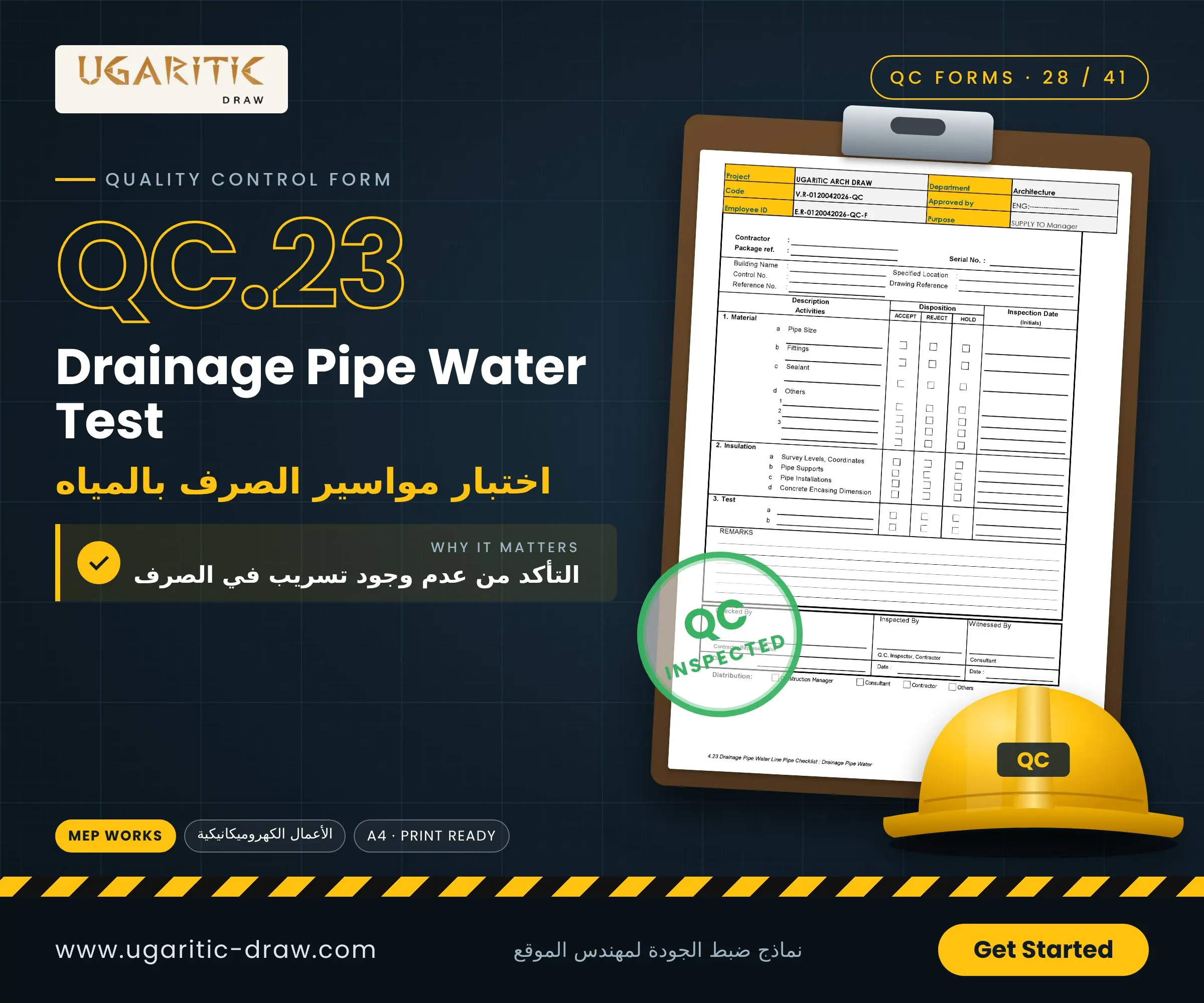
1. Brief Description of the Report
The document is a standardized technical field audit checklist organized to track pipeline parameters through sequential procurement and mounting phases. It consists of the following key sections:
- Site Reference & Tracking Data: Fields to specify the Contractor's name, Package Reference, Building Name, Specified Location of the piping run, and the approved Drawing Reference.
- Core Technical Inspection Modules (Description of Activities):
- Material: Verifying the correctness of the Pipe Size diameters, checking the technical compliance of joint Fittings, and inspecting the bonding chemical/solvent adhesives (Sealant).
- Insulation / Installation: Conducting precise topographical surveys to verify slope gradients and structural alignments (Survey Levels, Coordinates), auditing the structural durability of hangers (Pipe Supports), evaluating overall pipe layout installation methods, and measuring the physical boundaries of underground Concrete Encasing Dimensions.
- Test: Dedicated blank lines to note and execute mandatory pre-closure field integrity checks (such as hydrostatic gravity leak tests or pipe water flow-through tests).
- Actionable Evaluation Matrix & Validation: Functional side-by-side checkboxes for each audit sub-item offering three clear paths: ACCEPT, REJECT, or HOLD, followed by a wide space for general technical Remarks and the mandatory multi-party sign-off signatures from the contractor, QC inspector, and consultant.
2. Purpose of the Report
The primary purpose of this checklist is to field-verify that gravity drainage pipe runs are installed at exact engineering gradients and slopes to ensure smooth, unhindered waste fluid movement and completely eliminate future leak risks. Its core objectives include:
- Enforcing Accurate Slope Gradients to Prevent Clogging: Rigorously auditing the elevation alignment (Survey Levels); because drainage lines rely solely on gravity to move water, any deviation or flat spots in the slope will cause fluid stagnation, debris sedimentation, and eventual system backups.
- Mitigating Hidden Sub-Structural Water Leakage: Ensuring the total water-tightness of pipe welds, solvent bonds, and Sealants before burial to isolate and protect the building's concrete foundations and surrounding soil from being eroded or contaminated by leaking wastewater.
- Confirming Mechanical Pipe Anchoring Stability: Verifying that pipe hangers (Pipe Supports) or Concrete Encasing blocks are securely deployed to hold the pipelines rigid, protecting them from cracking or warping under structural live loads or soil settlement over time.
- Quality Records & Accountability Retention (Distribution): Keeping a binding quality register distributed to the Construction Manager, Consultant, and Contractor to update the final project closeout handover records.