

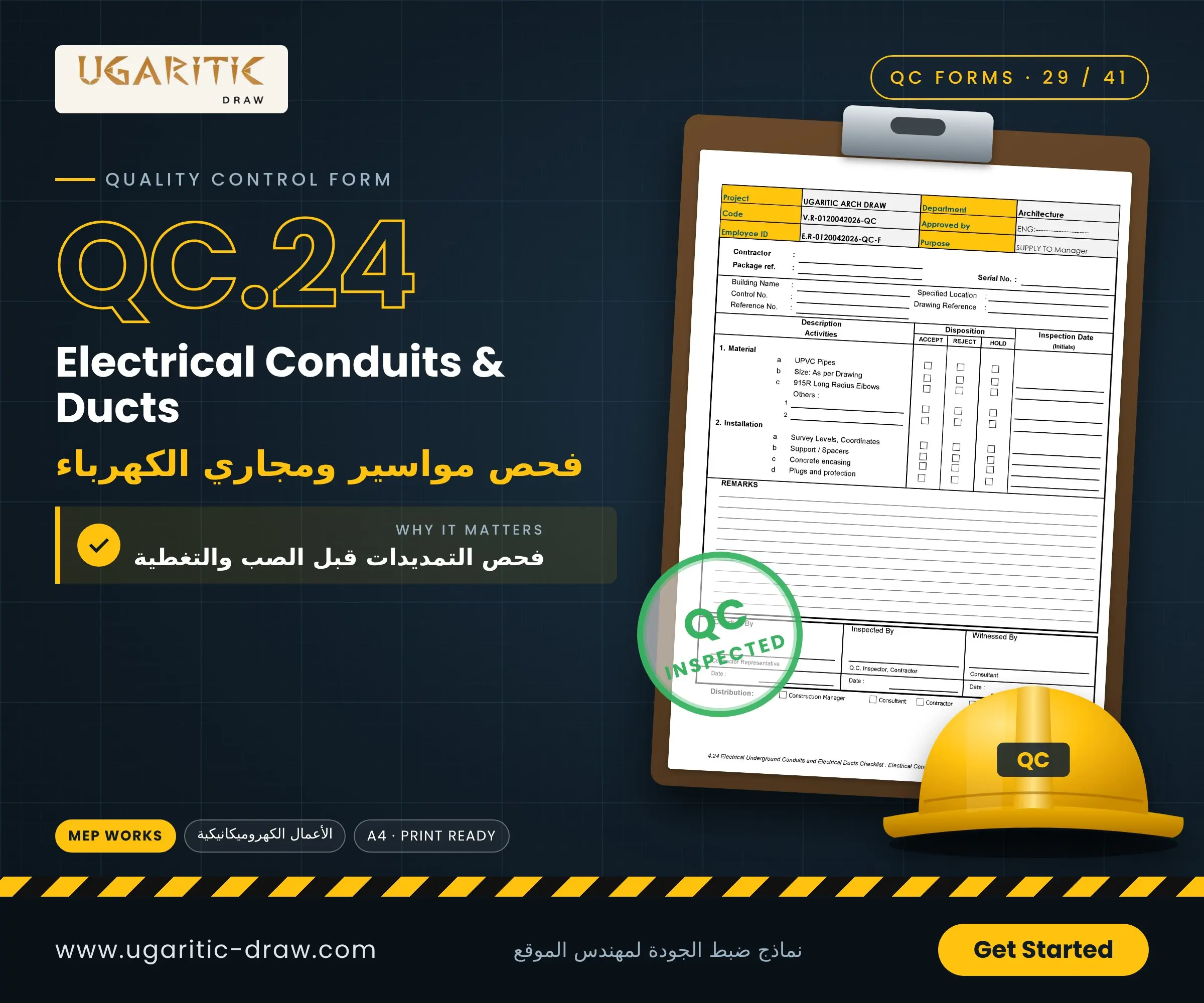
1. Brief Description of the Report
The document is a structured technical field auditing checklist organized to track subsurface utility routing through procurement and mounting phases. It consists of the following key sections:
- Site Reference & Tracking Data: Fields to specify the Contractor's name, Package Reference, Building Name, Specified Location of the trenching/routing layout, and the approved Drawing Reference.
- Core Technical Inspection Modules (Description of Activities):
- Material: Verifying the presence and physical grade of heavy-duty UPVC Pipes, ensuring the diameters comply exactly with approved schematics (Size: As per Drawing), and inspecting the utilization of sweep sweeps (915R Long Radius Elbows) designed to ease heavy cable pulling.
- Installation: Conducting precise topographical surveys to verify depth levels and coordinates (Survey Levels, Coordinates), auditing the positioning of structural separators (Support / Spacers) to maintain physical separation between adjacent pipes, evaluating protective Concrete encasing dimensions, and verifying the secure mounting of temporary end-caps (Plugs and protection) to prevent foreign debris entry.
- Actionable Evaluation Matrix & Validation: Functional side-by-side checkboxes for each audit sub-item offering three clear paths: ACCEPT, REJECT, or HOLD, followed by a wide space for general technical Remarks and the mandatory multi-party sign-off signatures from the contractor, QC inspector, and consultant.
2. Purpose of the Report
The primary purpose of this checklist is to field-verify that underground electrical containment runs are structurally protected, securely aligned, and physically unhindered to guarantee smooth cable pulling and long-term utility safety. Its core objectives include:
- Ensuring Smooth Cable Pulling Without Mechanical Friction: Strictly enforcing the installation of Long Radius Elbows and end-caps ensures that heavy-gauge high-voltage electrical cables can be winched through the conduits without snagging, jamming, or tearing their protective insulation jackets later.
- Shielding the Electrical Infrastructure from External Earth Loads: Verifying the integrity of the Concrete Encasing barrier ensures that the buried plastic UPVC pipes do not collapse, deflect, or fracture under the high compressive stresses of heavy field equipment traffic or future differential soil settlement.
- Preventing Internal Conduit Blockage During Construction: Confirming that all pipe ends are securely sealed with temporary Plugs prevents fresh liquid concrete, sand, or stones from flooding the empty pipes during pouring or backfilling operations, eliminating expensive structural breaking to clear blocked paths.
- Quality Records & Infrastructure Accountability Retention (Distribution): Storing a legally binding technical record distributed among the Construction Manager, Consultant, and Contractor to update the final project closeout quality log.